|
|
March 30th, 2018 
Filed under Miscellaneous.
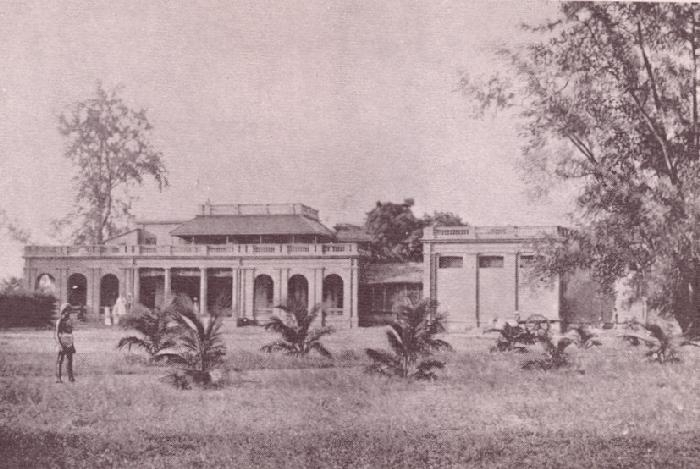
The Jubbulpore School of Industry is so thriving that the pupils, 800 in number, are obliged to work till ten o’clock at night to complete their orders; this they do most cheerfully. They are all Thugs, or the children of Thugs, and the hands which now ply the shuttle, or the axe, or the saw, have through the greater portion of their lives been familiar only with the poison cup or strangling rope.
Maulmain—On the 23rd November, the town of Maulmain was nearly blown up by the explosion of two hundred casks of gunpowder, which accidentally caught fire.
Captain Impey. —Extract of a letter from Maulmain.—”The The intelligence which has reached us of Captain Impey is not of the most positive nature, He is at one time said to be marching at the head of 20,000 Burmans to the attack of the Shans; at anothertime he is reported to be at Ava tendering his allegiance to that court and government, and the latest account is that that unfortunate and misguided man is ‘lying sick at Kherannee, Pappo’s village, having neither joined the Shans nor the Burmans. I have reason to believe that this letter is the correct statement. His friend Mr. Tracey some time ago applied to Government for the grant of a forest on the east bank of the Thoung-yeen, and pending the boon, both himself and Capt. Impey are lying upon their oars. As soon as the sanction is obtained, both intend to set vigourously to work in the timber trade, so that all the reports of his heading an army, and all that sort of stuff, is sheer downright nonsense.”—Englishman
March 30th, 2018 
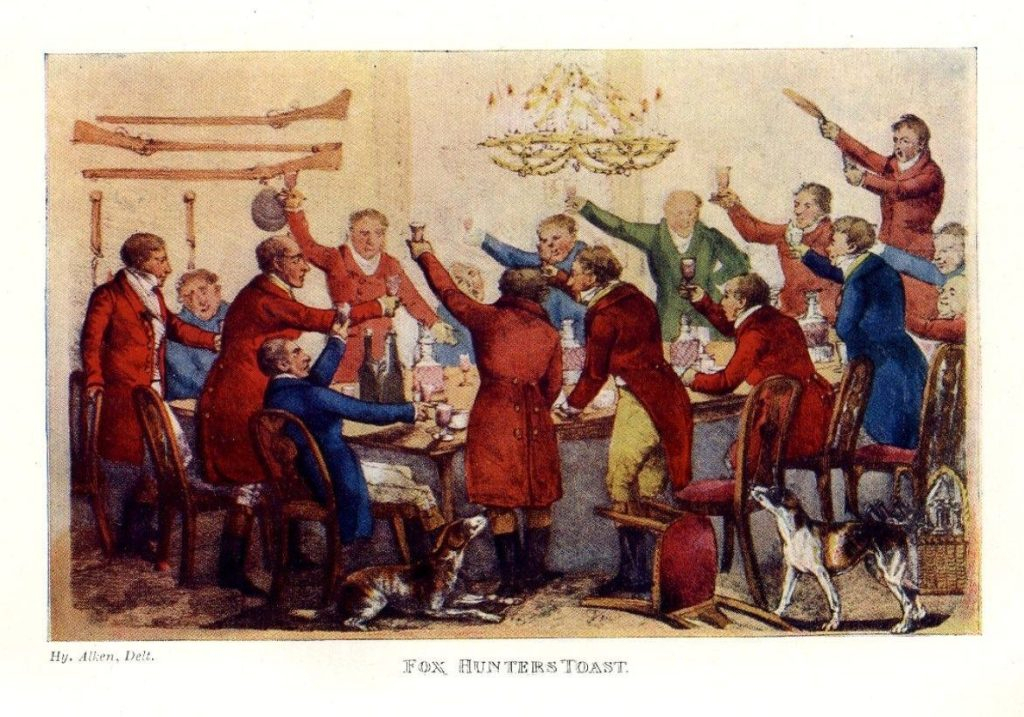
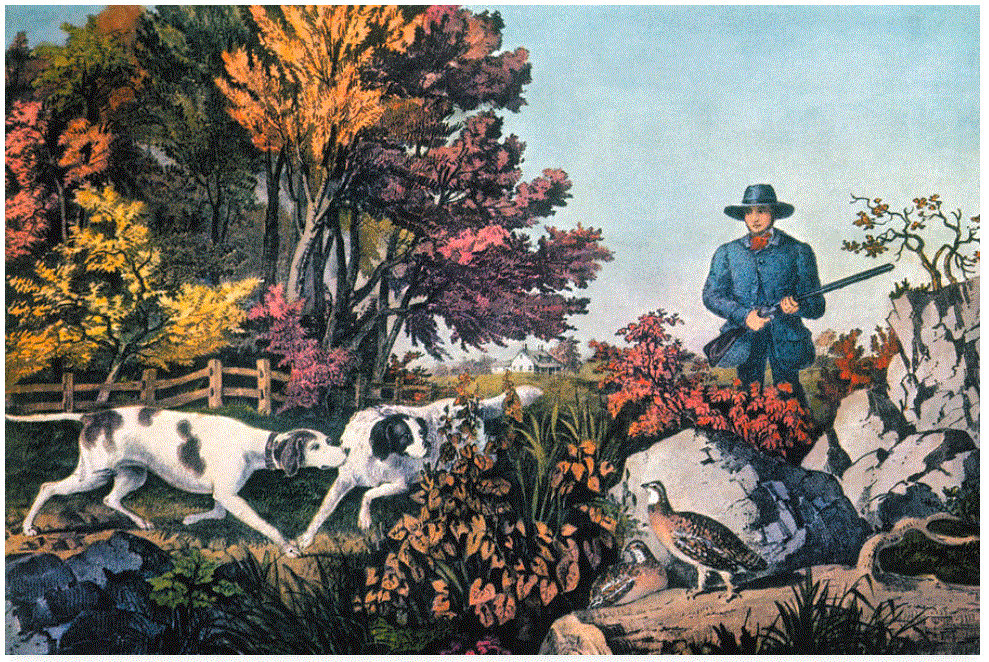
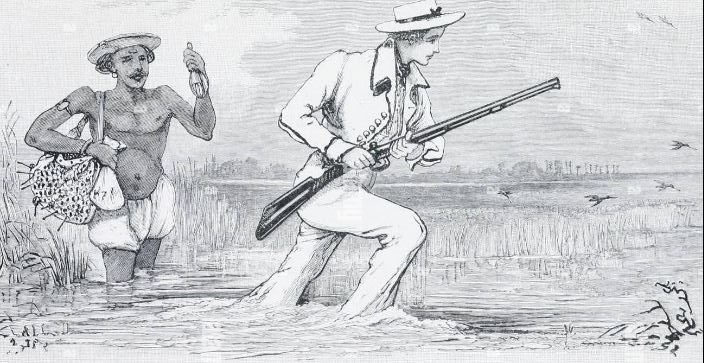
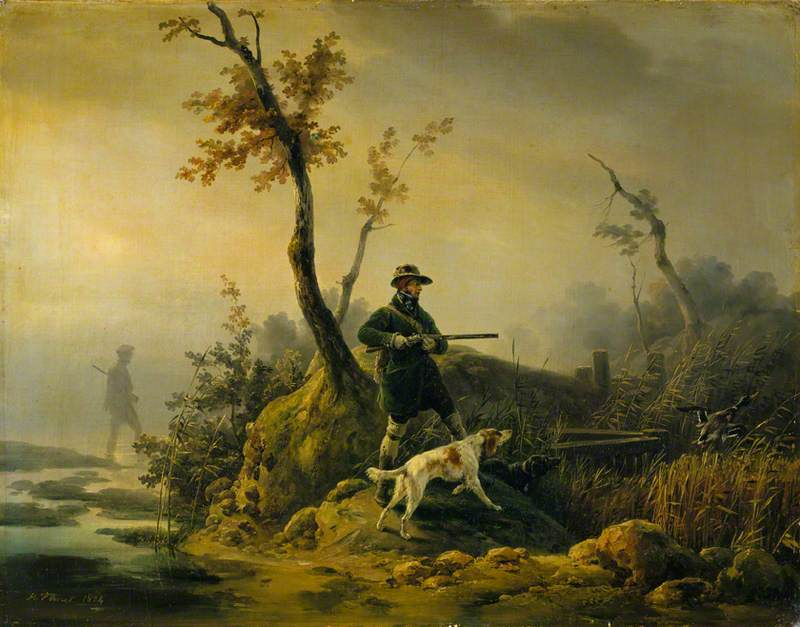
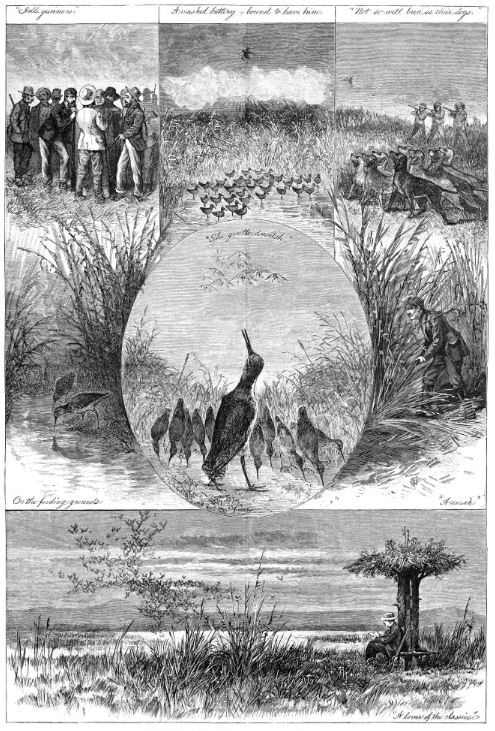
Snipe shooting-Epistle on snipe shooting, from Ned Copper
Cap, Esq., to George Trigger-George Trigger’s reply to
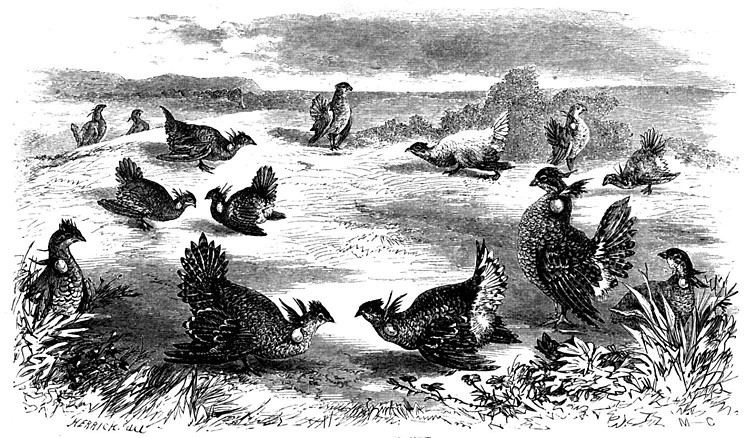
Ned Copper Cap-Black partridge.
——
“Si sine amore jocisque
Nil est jucundum, vivas in &more jooisque.”
-Horace.
“If nothing appears to you delightful without love and
sports, then live in sporta and love.”
——
I LOVE shooting. It is enjoyed in the open air. It removes one from the vicinity of flat-roofed, candle-pillared, sun-dried, brick-built, mulligatawny looking houses. You pursue it alone, or, in the society of a friend, equally well. Occasionally it is (I allow) rather hot work, but to a man whose particular taste may lead him to the viewing and enjoying the rays of that great luminary, the sun, shooting affords him the very best opportunity. A good day’s snipe shooting is however, in my opinion, sufficiently exciting to keep away all thoughts and fidgetings about either his power, influence or effects.
As yet old Phœbus has behaved with great liberality and kindness towards me, nor has he ever even shown an inclination in his hottest moments to quarrel. He has now, for some years past, thrown his burning beams pretty freely about my head when in pursuit of the snipe, and up to this day I am unscathed. Continue reading Snipe Shooting
March 29th, 2018  Group of Thuggee – From Harpers Magazine – Dec. 12, 1837 The existence of large bodies of men having no other means of subsistence than those afforded by plunder, is, in all countries, too common to excite surprise; and, unhappily, organized bands of assassins are not peculiar to India! The associations of murderers known by the name of Thugs present, however, so many remarkable points of character and manners, that curiosity may reasonably be excited to inquire into the history, and ascertain the feelings, opinions, and motives of persons differing, in many respects, so widely even from all other followers of their own horrible occupation. In different parts of India, these ruffians assume, and have been designated by, various names, derived either from the mode by which they dispatch their victims-from the purpose for which they destroy life, or from the arts by which they inveigle their prey to destruction. In the more northern parts of India, these murderers are called Thugs, the name by which they are most generally known among Europeans. This term signifies It “deceiver.” In some provinces to the southward, according to Dr. Sherwood, they have obtained the name of Phansigars, or It stranglers,” from the Hindostanee word phanai, a It noose.” By the same authority it is stated, that in the Tamul language they are called Ari Tulucar, or Mussulman It noosers”; in Canarese, Tanti Calleru, implying” thieves who use a wire or catgut noose”; and in Telagu, Warlu Wahndlu, or Warlu Vayshay Wahndloo, meaning people who use the noose.” Continue reading Life Among the Thugee
March 29th, 2018 
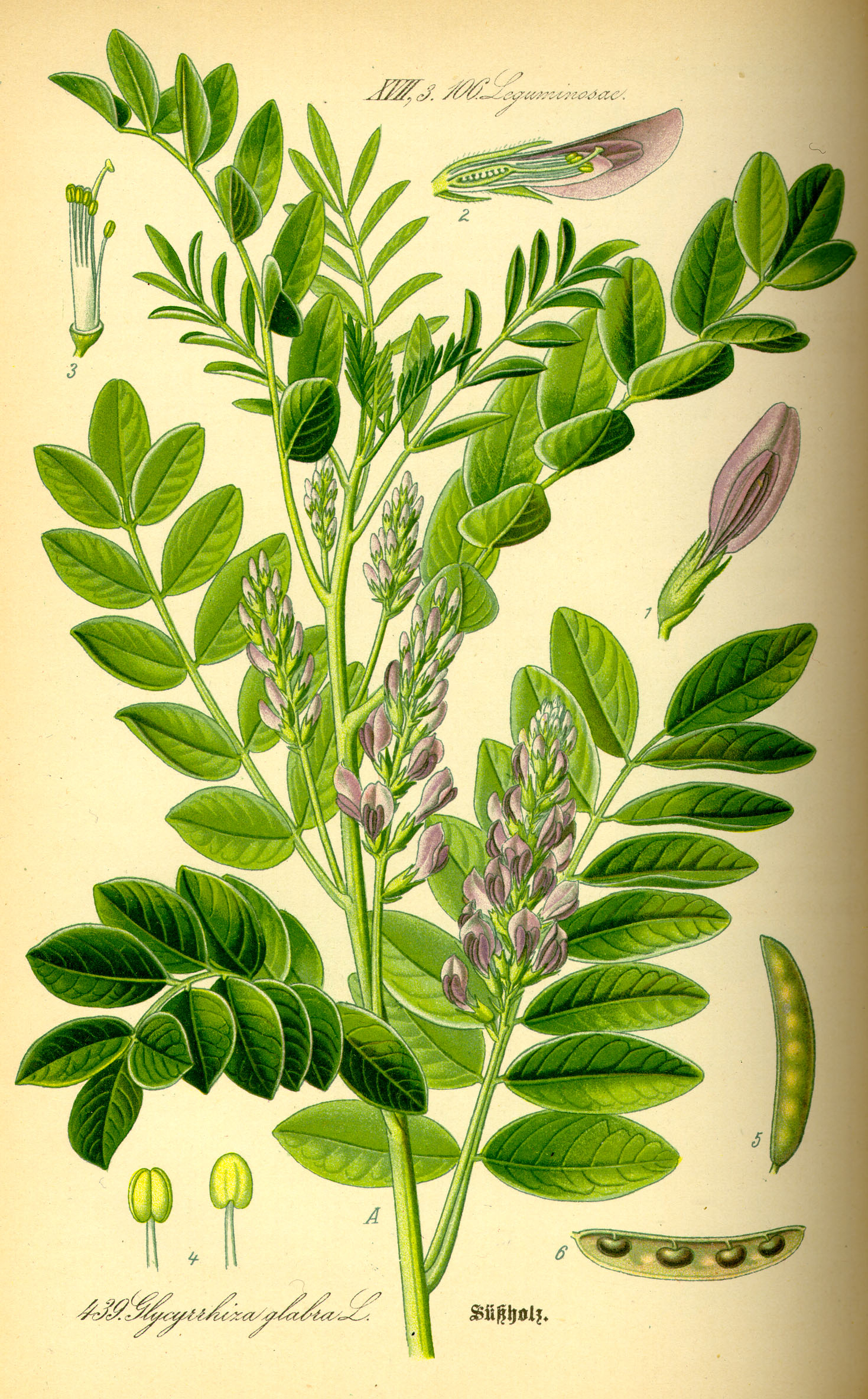
Liquorice, the roots of Glycirrhiza Glabra, a perennial plant, a native of the south of Europe, but cultivated to some extent in England, particularly at Mitcham, in Surrey.
Its root, which is its only valuable part, is long, fibrous, of a yellow colour, and when fresh, very juicy. The liquorice root grows wild in many parts of Greece, and especially in the province of Achaia, at Corinth and Missolonghi, in great abundance; its quality is considered very good, and has induced many to undertake its manufacture. Large quantities are annually prepared for exportation. Continue reading Fruits of the Empire: Licorice Root and Juice
March 29th, 2018 
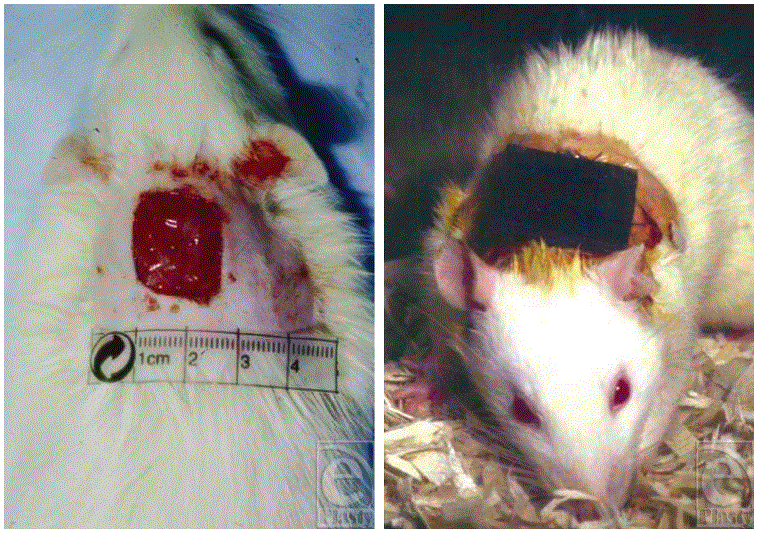
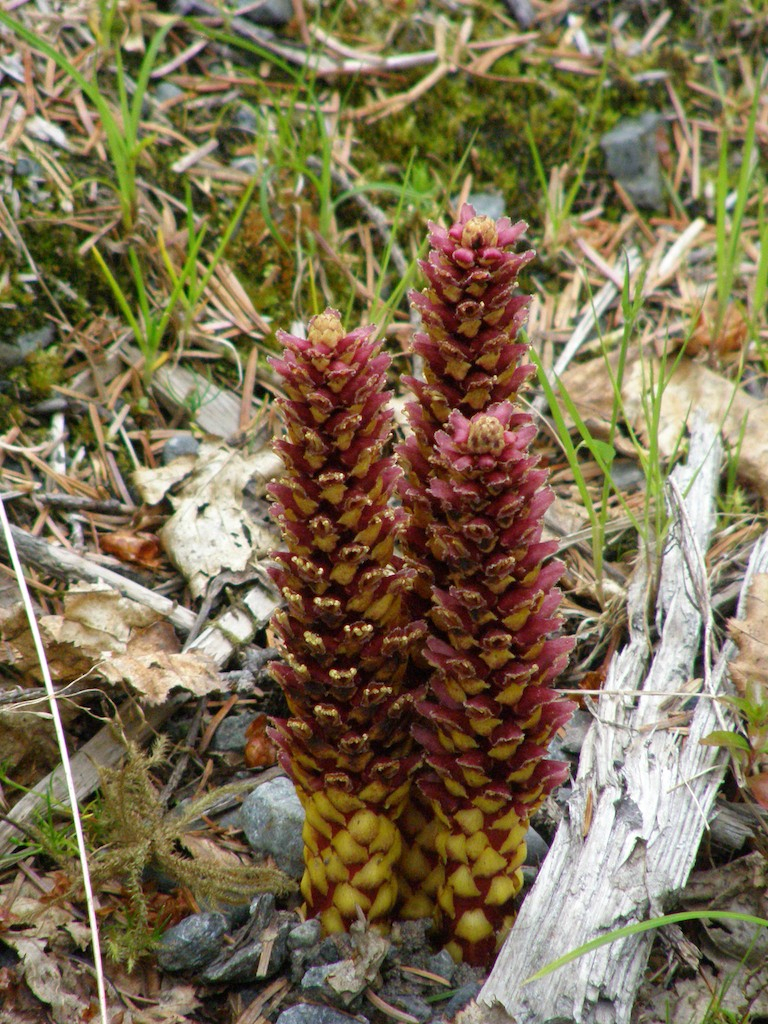
The following research discussion is from a study funded by the U.S. National Institute of Health entitled: Boschniakia rossica prevents the carbon tetrachloride-induced hepatotoxicity in rat. It may be of interest to heavy drinkers. Continue reading Of Interest to Heavy Drinkers: Cleansing the Liver with Northern Ground Cone (Boschniaka rossica)
March 29th, 2018 
From Conquest of the Tropics by Frederick Upham Adams
Chapter VI – Birth of the United Fruit Company
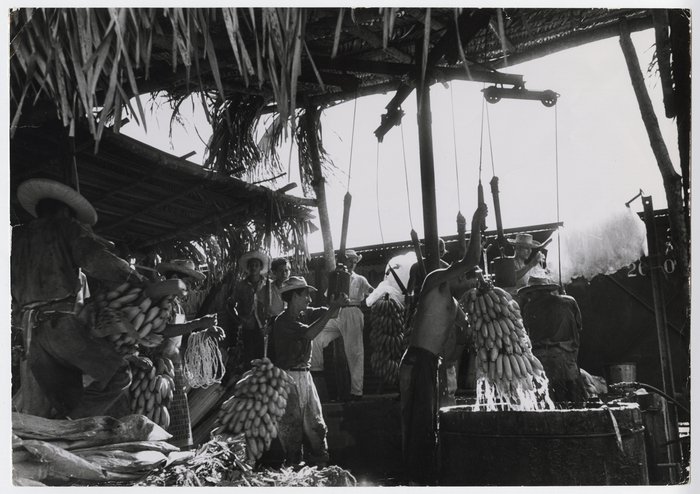
Only those who have lived in the tropic and are familiar with the hazards which confront the cultivation and marketing of its fruits can readily understand the motives which impelled a union of the interests of the Boston Fruit Company and those headed by Minor C. Keith. It was not a move calculated to control competition or to rear a monopoly; it was the business step imperatively required to secure the permanency of the banana industry. Continue reading Birth of United Fruit Company
March 29th, 2018 
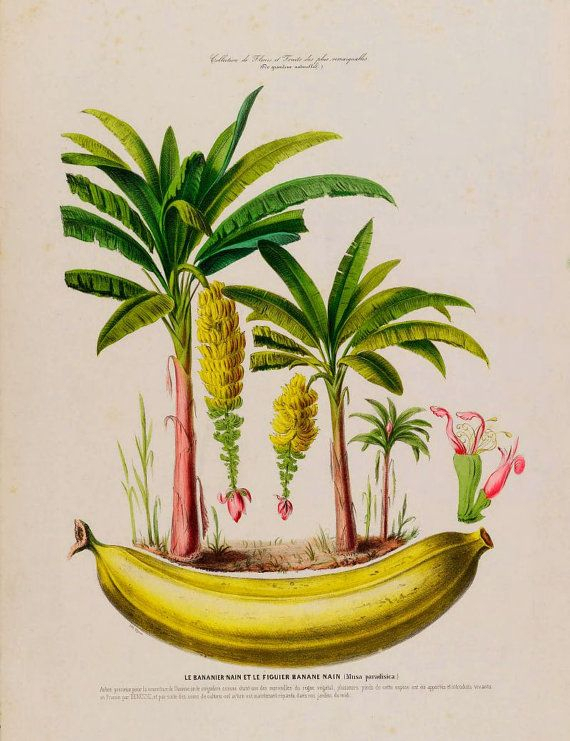
Banana Propagation
Reprinted from the International Institute of Tropical Agriculture (IITA.org)
The traditional means of obtaining banana planting material (“seed”) is to acquire suckers from one’s own banana garden, from a neighbor, or from a more distant source. This method served to spread common varieties around the world and to multiply them in their new locations. This system can be modified to produce more banana suckers or shoots by manipulating banana corms to allow more buds to sprout. One such method that is described here is called macropropagation. A higher tech procedure to rapidly produce many plants in just a few generations of propagation is called tissue culture. In tissue culture, plants are first surface sterilized and then grown in aseptic culture in test tubes using an artificial growth medium based on a gelling agent like agar. The tender tissue-cultured plants can then be planted in the field after rooting and hardening under protected conditions. Continue reading Banana Propagation
March 28th, 2018 
How happy is he born and taught.
That serveth not another’s will;
Whose armour is his honest thought,
And simple truth his utmost skill
Whose passions not his masters are;
Whose soul is still prepared for death,
Untied unto the world by care
Of public fame or private breath;
Who envies none that chance doth raise,
Nor vice; who never understood
How deepest wounds are given by praise;
Nor rules of state, but rules of good;
Who hath his life from rumours freed;
Whose conscience is his strong retreat;
Whose state can neither flatterers feed,
Nor ruin make oppressors great;
Who God doth late and early pray
More of His grace than gifts to lend;
And entertains the harmless day
With a religious book or friend;
This man is freed from servile bands
Of hope to rise or fear to fall:
Lord of himself, though not of lands,
And having nothing, yet hath all.
Sir Henry Wotton
March 28th, 2018 
Is the tea in your cup genuine?
The fact is, had one been living in the early 19th Century, one might occasionally encounter a counterfeit cup of tea. Food adulterations to include added poisonings and suspect substitutions were a common problem in Europe at the time. Continue reading Cup of Tea? To be or not to be
March 28th, 2018  The first published illustration of Nicotiana tabacum by Pena and De L’Obel, 1570–1571 (shrpium adversana nova: London). Tobacco can be used for medicinal purposes, however, the ongoing American war on smoking has all but obscured this important aspect of ancient plant.
Tobacco is considered to be an indigenous plant of the Americas and over 60 species are known to exist. Columbus first ran across cultivated tobacco in 1492. The word tobacco is a misnomer as the original names given to the various species included petum, betum, cogioba, cohobba, quauhyetl, picietl and yietl. Continue reading Tobacco as Medicine
|
|
|













































































![50 Watt 4 Stage Hi-Fidelity Power Amplifier Circuit and Parts List [The Basic Schematic of Most Low Cost Tube Guitar Amps Made Today]](https://countryhouseessays.com/wp-content/uploads/2026/02/5R4GYB-Tube.gif)