




















































Tulipmania
This transcript is a work in progress…
MEMOIRS OF EXTRAORDINARY POPULAR DELUSIONS AND THE MADNESS OF CROWDS.
By CHARLES MACKAY, LL.D.
CONTENTS.
-
THE MISSISSIPPI SCHEME.
John Law; his birth and youthful career—Duel between Law and Wilson—Law’s escape from the King’s Bench—The “Land-bank”—Law’s gambling propensities on the continent, and acquaintance with the Duke of Orleans—State of France after the reign of Louis XIV.—Paper money instituted in that country by Law—Enthusiasm of the French people at the Mississippi Scheme—Marshal Villars—Stratagems employed and bribes given for an interview with Law—Great fluctuations in Mississippi stock—Dreadful murders—Law created comptroller-general of finances—Great sale for all kinds of ornaments in Paris—Financial difficulties commence—Men sent out to work the mines on the Mississippi, as a blind—Payment stopped at the bank—Law dismissed from the ministry—Payments made in specie—Law and the Regent satirised in song—Dreadful crisis of the Mississippi Scheme—Law, almost a ruined man, flies to Venice—Death of the Regent—Law obliged to resort again to gambling—His death at Venice
-
THE SOUTH-SEA BUBBLE.
Originated by Harley Earl of Oxford—Exchange Alley a scene of great excitement—Mr. Walpole—Sir John Blunt—Great demand for shares—Innumerable “Bubbles”—List of nefarious projects and bubbles—Great rise in South-sea stock—Sudden fall—General meeting of the directors—Fearful climax of the South-sea expedition—Its effects on society—Uproar in the House of Commons—Escape of Knight—Apprehension of Sir John Blunt—Recapture of Knight at Tirlemont—His second escape—Persons connected with the scheme examined—Their respective punishments—Concluding remarks
-
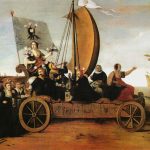
THE TULIPOMANIA.
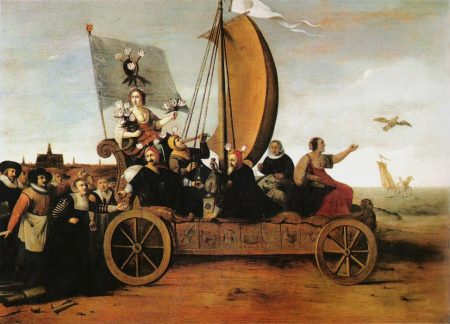
Conrad Gesner—Tulips brought from Vienna to England—Rage for the tulip among the Dutch—Its great value—Curious anecdote of a sailor and a tulip—Regular marts for tulips—Tulips employed as a means of speculation—Great depreciation in their value—End of the mania
-
THE ALCHYMISTS.
Introductory remarks—Pretended antiquity of the art—Geber—Alfarabi—Avicenna—Albertus Magnus—Thomas Aquinas—Artephius—Alain de Lisle—Arnold de Villeneuve—Pietro d’Apone—Raymond Lulli—Roger Bacon—Pope John XXII.—Jean de Meung—Nicholas Flamel—George Ripley—Basil Valentine—Bernard of Trèves—Trithemius—The Maréchal de Rays—Jacques Cœur—Inferior adepts—Progress of the infatuation during the sixteenth and seventeenth centuries—Augurello—Cornelius Agrippa—Paracelsus—George Agricola—Denys Zachaire—Dr. Dee and Edward Kelly—The Cosmopolite—Sendivogius—The Rosicrucians—Michael Mayer—Robert Fludd—Jacob Böhmen—John Heydon—Joseph Francis Borri—Alchymical writers of the seventeenth century—Delisle—Albert Aluys—Count de St. Germain—Cagliostro—Present state of the science
-
MODERN PROPHECIES.
Terror of the approaching day of judgment—A comet the signal of that day—The prophecy of Whiston—The people of Leeds greatly alarmed at that event—The plague in Milan—Fortune-tellers and Astrologers—Prophecy concerning the overflow of the Thames—Mother Shipton—Merlin—Heywood—Peter of Pontefract—Robert Nixon—Almanac-makers
-
FORTUNE-TELLING.
Presumption and weakness of man—Union of Fortune-tellers and Alchymists—Judicial astrology encouraged in England from the time of Elizabeth to William and Mary—Lilly the astrologer consulted by the House of Commons as to the cause of the Fire of London—Encouragement of the art in France and Germany—Nostradamus—Basil of Florence—Antiochus Tibertus—Kepler—Necromancy—Roger Bacon, Albertus Magnus, Arnold Villeneuve—Geomancy—Augury—Divination: list of various species of divination—Oneiro-criticism (interpretation of dreams)—Omens
-
THE MAGNETISERS.
The influence of imagination in curing diseases—Mineral magnetisers—Paracelsus—Kircher the Jesuit—Sebastian Wirdig—William Maxwell—The Convulsionaries of St. Medard—Father Hell—Mesmer, the founder of Animal Magnetism—D’Eslon, his disciple—M. de Puysegur—Dr. Mainauduc’s success in London—Holloway, Loutherbourg, Mary Pratt, &c.—Perkins’s “Metallic Tractors”—Decline of the science
-
INFLUENCE OF POLITICS AND RELIGION ON THE HAIR AND BEARD.
Early modes of wearing the hair and beard—Excommunication and outlawry decreed against curls—Louis VII.’s submission thereto the cause of the long wars between England and France—Charles V. of Spain and his courtiers—Peter the Great—His tax upon beards—Revival of beards and moustaches after the French Revolution of 1830—The King of Bavaria (1838) orders all civilians wearing moustaches to be arrested and shaved—Examples from Bayeux tapestry
Preface.
In reading the history of nations, we find that, like individuals, they have their whims and their peculiarities; their seasons of excitement and recklessness, when they care not what they do. We find that whole communities suddenly fix their minds upon one object, and go mad in its pursuit; that millions of people become simultaneously impressed with one delusion, and run after it, till their attention is caught by some new folly more captivating than the first. We see one nation suddenly seized, from its highest to its lowest members, with a fierce desire of military glory; another as suddenly becoming crazed upon a religious scruple; and neither of them recovering its senses until it has shed rivers of blood and sowed a harvest of groans and tears, to be reaped by its posterity. At an early age in the annals of Europe its population lost their wits about the sepulchre of Jesus, and crowded in frenzied multitudes to the Holy Land; another age went mad for fear of the devil, and offered up hundreds of thousands of victims to the delusion of witchcraft. At another time, the many became crazed on the subject of the philosopher’s stone, and committed follies till then unheard of in the pursuit. It was once thought a venial offence, in very many countries of Europe, to destroy an enemy by slow poison. Persons who would have revolted at the idea of stabbing a man to the heart, drugged his pottage without scruple. Ladies of gentle birth and manners caught the contagion of murder, until poisoning, under their auspices, became quite fashionable. Some delusions, though notorious to all the world, have subsisted for ages, flourishing as widely among civilised and polished nations as among the early barbarians with whom they originated,—that of duelling, for instance, and the belief in omens and divination of the future, which seem to defy the progress of knowledge to eradicate them entirely from the popular mind. Money, again, has often been a cause of the delusion of multitudes. Sober nations have all at once become desperate gamblers, and risked almost their existence upon the turn of a piece of paper. To trace the history of the most prominent of these delusions is the object of the present pages. Men, it has been well said, think in herds; it will be seen that they go mad in herds, while they only recover their senses slowly, and one by one.
Some of the subjects introduced may be familiar to the reader; but the Author hopes that sufficient novelty of detail will be found even in these, to render them acceptable, while they could not be wholly omitted in justice to the subject of which it was proposed to treat. The memoirs of the South-Sea madness and the Mississippi delusion are more complete and copious than are to be found elsewhere; and the same may be said of the history of the Witch Mania, which contains an account of its terrific progress in Germany, a part of the subject which has been left comparatively untouched by Sir Walter Scott in his Letters on Demonology and Witchcraft, the most important that have yet appeared on this fearful but most interesting subject.
Popular delusions began so early, spread so widely, and have lasted so long, that instead of two or three volumes, fifty would scarcely suffice to detail their history. The present may be considered more of a miscellany of delusions than a history—a chapter only in the great and awful book of human folly which yet remains to be written, and which Porson once jestingly said he would write in five hundred volumes! Interspersed are sketches of some lighter matters,—amusing instances of the imitativeness and wrongheadedness of the people, rather than examples of folly and delusion.
Religious matters have been purposely excluded as incompatible with the limits prescribed to the present work; a mere list of them would alone be sufficient to occupy a volume.
Top of Pg.Home