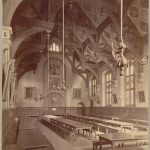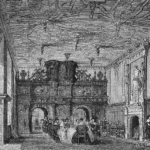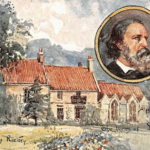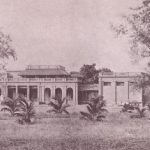








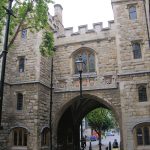
















































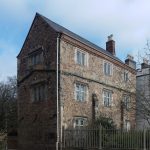






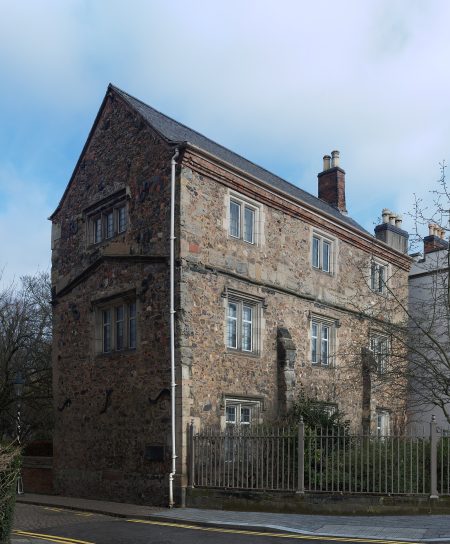
Wyggeston’s Chantry House in Leicester: grade II* listed and part of the Newarke Houses Museum. Built by William Wyggeston as a chantry house.
Privately built chapel
Secondly, a chantry chapel is a building on private land or a dedicated area or altar within a parish church or cathedral, set aside or built especially for the performance of the “chantry duties” by the priest. A chantry may occupy a single altar, for example in the side aisle of a church, or an enclosed chapel within a larger church, generally dedicated to the donor’s favourite saint.
Many chantry altars became richly endowed, often with gold furnishings and valuable vestments. Over the centuries, chantries increased in embellishments, often by attracting new donors and chantry priests. Those feoffees who could afford to employ them in many cases enjoyed great wealth. Sometimes this led to corruption of the consecrated life expected of clergymen. It also led in general to an accumulation of great wealth and power in the Church, beyond the feudal control of the Crown. This evident amassing of assets was one of the pretexts used by King Henry VIII to order the Dissolution of the Monasteries in England.
At the time of the Dissolution, chantries were abolished and their assets were sold or granted to persons at the discretion of Henry and his son King Edward VI, via the Court of Augmentations. Many Tudor businessmen, such as Thomas Bell (1486–1566) of Gloucester, acquired chantries as financial investments for the afterlife, but yielding income streams in the here and now, derived from chantry rents; or the chantry assets could be “unbundled” and sold on piecemeal at a profit.
(Source: Reprint from Wikipedia)
Top of Pg.Home